
Last updated November 17, 2026







Free written scope consultation - allowances, timeline, and change-order rules on paper before a single trade is scheduled
Construction Warning Signs: A Lewisville Homeowner’s Reference Guide
The warning signs that cost Lewisville homeowners the most money are rarely the ones that look dramatic. A sagging roofline gets attention. A crack that runs diagonally from the top corner of a window frame usually gets a coat of paint. And that’s the problem. In this part of North Texas, the soil under your house moves with the seasons, the summers bake the exterior, and the spring humidity works its way into the smallest seam. The expensive failures almost always start as small, explainable-looking details. This guide walks through those early indicators by system, tells you how to read them, and gives you a simple test for deciding what needs attention this week, this quarter, or not at all.
Quick Answer
Construction warning signs in a Lewisville home fall into three groups: structural movement (cracks in drywall, brick, or foundation edges), moisture intrusion (soft trim, lifted flashing, bubbling paint), and material fatigue (granule loss on shingles, hairline fractures in concrete). The signs that matter most are the ones that are new, growing, or clustered together. A single settled crack that hasn’t changed in a year is monitoring. A crack that widens over one season, or three small signs appearing together, needs a professional look before it turns into a repair.
Styles & brands we work with
- Kitchen remodeling
- Bathroom remodeling
- Home additions & ADU
- Roofing
- Windows & doors
- Driveway & pavers
- Fence
Table of Contents
- Foundation Warning Signs and What Each Crack Direction Tells You
- Roof Warning Signs North Texas Weather Hides From the Ground
- Driveway and Flatwork Signals That Base Failure Is Starting
- Siding and Trim Signs That Moisture Is Already Behind the Surface
- The Three-Touch Test: Same-Week, 90-Day, or Monitor
- How Lewisville’s Seasons Drive the Warning Calendar
- How to Document What You Find Before You Call Anyone
Foundation Warning Signs and What Each Crack Direction Tells You
Foundation warning signs in Lewisville follow a hierarchy, and the direction of the crack matters more than its length. A diagonal crack in drywall usually tracks movement, a horizontal crack in a foundation wall or brick course usually signals pressure, and a vertical crack is often the least urgent. Reading direction first, then width and growth rate, tells you how much time you have.
The reason direction matters here is the soil. Lewisville sits on expansive clay that swells when it’s wet and shrinks when it dries. A wet spring followed by a dry summer pulls the ground away from the foundation on one side and pushes it on another. The house doesn’t move as one piece; it flexes. The cracks that result are a map of that flexing.
- Diagonal cracks that run from the corner of a window or door frame toward the ceiling or floor usually indicate differential settlement, meaning one part of the foundation is moving relative to another. These are the ones to watch most closely. They often follow the same angle on both sides of a room.
- Horizontal cracks in a brick exterior, a foundation stem wall, or a block wall are a pressure signal, not a settlement signal. Soil pushing against a wall from the outside creates horizontal separation. These deserve a professional look quickly because they don’t self-correct.
- Vertical cracks in a slab or a garage floor are frequently shrinkage cracks from the original pour. A vertical crack that has stayed hairline for years is low priority. A vertical crack that has widened, or one side has shifted slightly higher than the other, has changed category.
Two more signs belong in the same assessment. Doors and windows that suddenly stick in a room where they never did is the same information as a diagonal crack, just expressed through the frame. And a gap opening between the brick and the window frame on the exterior is the outdoor version of the same movement.
If you’re planning a larger project and want to understand how foundation condition affects scope, our overview of Construction Lewisville walks through how we sequence structural assessment before any addition or remodel begins. We’d rather find the movement before we frame a wall onto it.
Roof Warning Signs North Texas Weather Hides From the Ground
Most hail damage in North Texas is invisible from the driveway. The signs that matter are on the shingles themselves: granule loss patterns, impact marks on ridge caps, and flashing that has lifted a fraction of an inch. Ground-level photos miss all three. A roof that looks fine from the street can have soft spots and lifted flashings that let water in during the next hard rain.
Granule loss is the most reliable early roof indicator. New asphalt shingles start with a uniform, gritty surface. Wind and hail knock granules loose, and the loss shows up first on the slopes that face the prevailing weather and on the ridge. You don’t need to climb up to check. Look at the ground at the base of your downspouts after a rain. A heavy accumulation of dark grit, more than you’d expect for the age of the roof, is the sign. So is visible lighter-colored patching on the shingles from below.
Ridge caps fail before field shingles because they take impact at the peak. If you can see from a second-story window that the ridge cap shingles look chewed or uneven compared to the rest of the roof, that’s a pattern worth an inspection. Flashing lift is harder to see. The metal flashing around a chimney, a vent stack, or a skylight sits in a bed of sealant. When that sealant cracks and the metal lifts even slightly, water gets under the shingle course below it. A dark stain on a ceiling isn’t the first sign; it’s the second or third.
GAF, CertainTeed, and Owens Corning all make shingle systems with published installation specs, and how a roof was detailed at the flashing matters as much as the shingle brand. When we inspect a roof, we check the flashing detail first. A properly installed GAF system with clean flashing will outlast a premium shingle installed carelessly.
Three roof signs mean a call now rather than later: granules in the gutter and on the ground, visible lifting at any penetration, and any soft spot on the deck underfoot. Water damage moves fast once it’s through the deck.
Driveway and Flatwork Signals That Base Failure Is Starting
Surface cracks in a driveway are the last sign of a problem, not the first. The earliest indicators of base failure are edge heave, joint widening, and water running the wrong direction. Those three show up months before the concrete cracks, and they’re the window where the repair is still small.
Concrete doesn’t fail from the top down. It fails because the base under it has moved. In Lewisville, that movement comes from clay that swells and shrinks and from water that finds a low spot and stays there. The surface is just the messenger.
- Edge heave is the driveway slab lifting at one edge, usually where it meets the yard or the garage apron. It means the soil under that edge has expanded, often from a downspout or a slope pushing water toward the slab. A lifted edge creates a trip hazard and starts to lever against the next slab.
- Joint widening is the expansion joint between slabs opening up. New joints have a consistent gap. When one joint is noticeably wider than the others along the same driveway, the slabs on either side are moving apart. That’s the base losing support.
- Drainage redirection is harder to spot but tells you the most. After a heavy rain, follow the water. If it pools against the foundation, runs into a joint, or sits on a slab rather than running off toward the yard or the street, the grading has already changed. Water sitting against concrete is the cause, not the symptom.
Pavers and hardscape show the same warning signs a little differently. A paver driveway with a dip in one area, or pavers starting to separate at the edge, is showing base loss under the sand setting bed. Edging that has moved outward is the paver version of edge heave. A properly built paver system with a stable base and correct edge restraint doesn’t show those signs, which is why the base layer is the part of the job worth asking about.
When a driveway is past the warning stage and you’re weighing replacement, our guide to driveway & pavers covers how we assess whether pavers or a new slab is the right call for the conditions under your driveway. It covers base preparation in detail, since that’s where most of the durability lives.
Siding and Trim Signs That Moisture Is Already Behind the Surface
Siding warning signs that look cosmetic are often moisture intrusion that has already started behind the surface. The difference is subtle: paint peeling in sheets is a surface problem, while paint bubbling in small irregular spots is water pushing from behind. Knowing which is which, and how each siding material fails, tells you whether you have a paint job or a moisture problem in a Lewisville spring.
The high-humidity months in this area are the test period. Siding that held up through a dry summer shows its weak points once the moisture comes back. The material matters, because fiber cement, wood, and vinyl fail in different ways.
Fiber cement
Fiber cement is durable, but it’s not maintenance-free. The failure mode is at the seams and the penetrations, not the field. Caulk that has cracked at a butt joint lets water in behind the plank. The sign is a soft spot you can press with a thumb, or paint that’s bubbling along a seam line. Check the bottom course first, where moisture wicks up from the ground.
Wood siding and trim
Wood shows moisture first at the end grain, where a board is cut. If a piece of trim feels spongy at the corner, or a fingernail sinks in, water has been sitting there. Check the window sills and the base of any vertical trim. Wood that’s failed at the end grain needs replacement, not a coat of paint.
Vinyl siding
Vinyl doesn’t rot, but it hides problems behind it. Loose or wavy panels often mean the sheathing behind has absorbed moisture and swelled. The sign is a panel that no longer locks to its neighbor or a dent that stays after you press it. Vinyl that’s installed with proper house wrap and flashing performs fine; vinyl that’s been put on over a wet substrate traps the moisture in.
James Hardie fiber cement siding is one of the materials we work with for exterior envelope coverage, and the installation details (proper flashing at every penetration, the right caulk at every joint) matter more than the plank itself. That’s the part most re-siding jobs get wrong.
Any soft spot, any bubbling paint on a seam, and any persistent moisture smell near an exterior wall means the wall cavity needs inspection. That’s a “same-week” category sign, not a “next spring” one.
The Three-Touch Test: Same-Week, 90-Day, or Monitor
The three-touch test helps you sort construction warning signs into three priorities using three simple questions. Here’s how to use it: for any sign you find, ask (1) does it move when you press it, (2) is it new or growing, and (3) is anything else in the same area showing a sign. Your answers determine whether it’s a same-week call, a 90-day plan, or a monitor.
The value of a simple test is that it stops you from either overreacting to a cosmetic crack or ignoring a real problem. Here’s how to apply it, with examples from each category.
Same-week attention
Any sign that presses soft, any sign that’s grown noticeably within one season, or three or more signs clustering in one area.
- A ceiling stain that appeared after a rain, with a matching bubble in the attic sheathing above it. Water is actively getting in.
- A horizontal crack in the brick that’s wider at one end than the other, and a door nearby that’s started to stick. Two signs, same wall, both movement.
- A wood window sill that’s soft to the touch and paint peeling in a line above it. Moisture has been there long enough to rot the sill and reach the wall cavity.
90-day plan
Signs that are stable but indicate a known issue that needs correcting before the next season.
- A single diagonal drywall crack with no door or window binding nearby. Book an inspection and a repair plan for the next quarter, not this week.
- A paver driveway with a slight dip in one area and edging that’s moving outward a quarter-inch. Address the base before the season changes.
- A driveway joint that’s wider than its neighbors but hasn’t cracked yet. Schedule the repair or replacement as a planned project.
Monitor
Signs that are cosmetic, long-standing, and unchanged.
- A vertical hairline crack in a garage slab that you remember from a decade ago, still the same width.
- A single small paint blister on a north-facing wall with no soft material behind it.
- A ridge cap shingle that’s slightly lighter in color but intact and not lifting.
Once you’ve sorted your signs into these three groups, take a photo of each one with a household object (a coin, a tape measure, a pencil) in frame for scale. The comparison over time is what converts “monitor” into a real plan or rules it out. That’s the difference between a homeowner who calls at the right moment and one who calls after the damage.
How Lewisville’s Seasons Drive the Warning Calendar
Lewisville’s construction warning signs follow a seasonal pattern, and knowing when each system is most likely to show its weak point lets you inspect on a schedule instead of a hunch. Spring and early summer are the moisture test for the exterior. Late summer and early fall are the movement test for the foundation and flatwork. The mild winters here mean you get a long stretch where nothing’s under stress, which is when the repairs you planned in fall are easiest to schedule.
Spring and the early part of summer bring humidity and heavy rain. That’s when siding seams, window flashing, and roof penetrations either hold or fail. If your roof or siding is going to leak, it does it during this stretch. The upside: the signs are easiest to spot then too. A walk around the exterior after a heavy rain, checking the seams, the sills, and the ground at the downspouts, gives you a full report in about twenty minutes.
Late summer and early fall dry the clay out. That’s the movement window. Cracks in drywall, brick, and concrete that were invisible in a wet spring will open up in the dry fall. If you do one inspection a year, do it in the fall, when the movement is most visible.
Winter gives you the scheduling room. The mild weather means exterior work on roofing, siding, and windows can still get done, and you’re not competing with storm-season demand for a contractor’s time. If your three-touch test has put something into the 90-day category in the fall, winter is the window to plan and price it. Materials like James Hardie siding installed to the manufacturer’s spec in mild weather are the same job as in a rush; the difference is who’s available to do it carefully.
One more scheduling note for Lewisville: the pattern of a wet spring followed by a dry summer means foundation cracks often appear in the fall in houses that looked fine in March. Don’t assume a clean spring checkup means a clean fall. Check both.
How to Document What You Find Before You Call Anyone
The best time to document construction warning signs is before you call a professional, not after. A documented record of when a crack appeared, how fast it grew, and what else showed the same symptom does two things. It lets a contractor give you a faster, more accurate assessment, and it’s what distinguishes a real structural issue from a settled, stable one. Here’s how to build that record in a way that’s actually useful.
- Number each sign and give it a location. “Crack 1, front bedroom, above the left side of the window frame” saves a walk-around. A floor plan sketch with numbered marks works well.
- Photograph with scale. Place a coin, a pencil, or a ruler alongside the crack or the soft spot. The ruler is what lets a contractor tell whether the width has changed.
- Note the direction and the pattern. Diagonal, vertical, horizontal. Does it follow a window corner? Does it mirror a crack in another room?
- Track the dates. When did you first notice it? Recheck and rephotograph in 30 days. A crack that grows in your record is a different finding than one that hasn’t changed.
- Note what’s soft or wet. Press any suspect material. A thumb that sinks into trim or a soft spot on a ceiling is worth recording with the same scale reference.
- Note the weather window. Was the sign most visible after rain or in the dry fall? That context points a contractor to which system is under stress.
This record is exactly what makes a free estimate fast and accurate. When a homeowner can point to a numbered crack with dated photos and say “this grew a sixteenth of an inch between May and September,” the conversation starts at a real place instead of a guess.
If the docs point toward framing or an addition, our guide to home additions & ADU covers how structural assessment folds into a build plan, including where site-built and prefab modular methods (Abodu, Boxabl, Mighty Buildings, Dvele) fit the site conditions you’re already documenting.
Common Mistakes to Avoid
- Painting over a diagonal crack as a “fix.” Filling and painting hides the sign without addressing the cause. The crack will reopen, usually wider, and you’ll have lost the photographic record that would have told you how fast it was moving. Fix the movement, then paint.
- Judging roof condition from the driveway. The granule loss and flashing lift that signal roof trouble aren’t visible from ground level. A roof that “looks fine” from the street is not a verdict. Check the downspout catch and the ridge from a window.
- Ignoring a soft spot because it’s small. A thumb-sized soft spot on exterior trim is early moisture intrusion, not late. In Lewisville’s humid spring, water behind a wall travels and can reach insulation and framing before the drywall shows a stain. Soft equals behind-the-surface, and that means a call.
- Assuming a widened driveway joint is a surface problem. A joint that’s wider than its neighbors is a base problem showing at the surface. Filling the joint with crack sealant doesn’t fix the base and can trap water against the slab.
- Checking for foundation issues only in the spring. In Lewisville, movement shows most in the dry fall, not the wet spring. A March checkup that looks clean doesn’t rule out a fall crack.
- Skipping the documentation. Without dated photos or measurements, you can’t tell whether a sign is growing or stable, and neither can a contractor. The record is what turns a guess into an assessment.
- Calling on a leak without protecting the area first. If a ceiling is actively leaking, move furniture and put a bucket under the drip before the visit. The moisture source needs a professional; the contents of the room need moving now.
See the difference
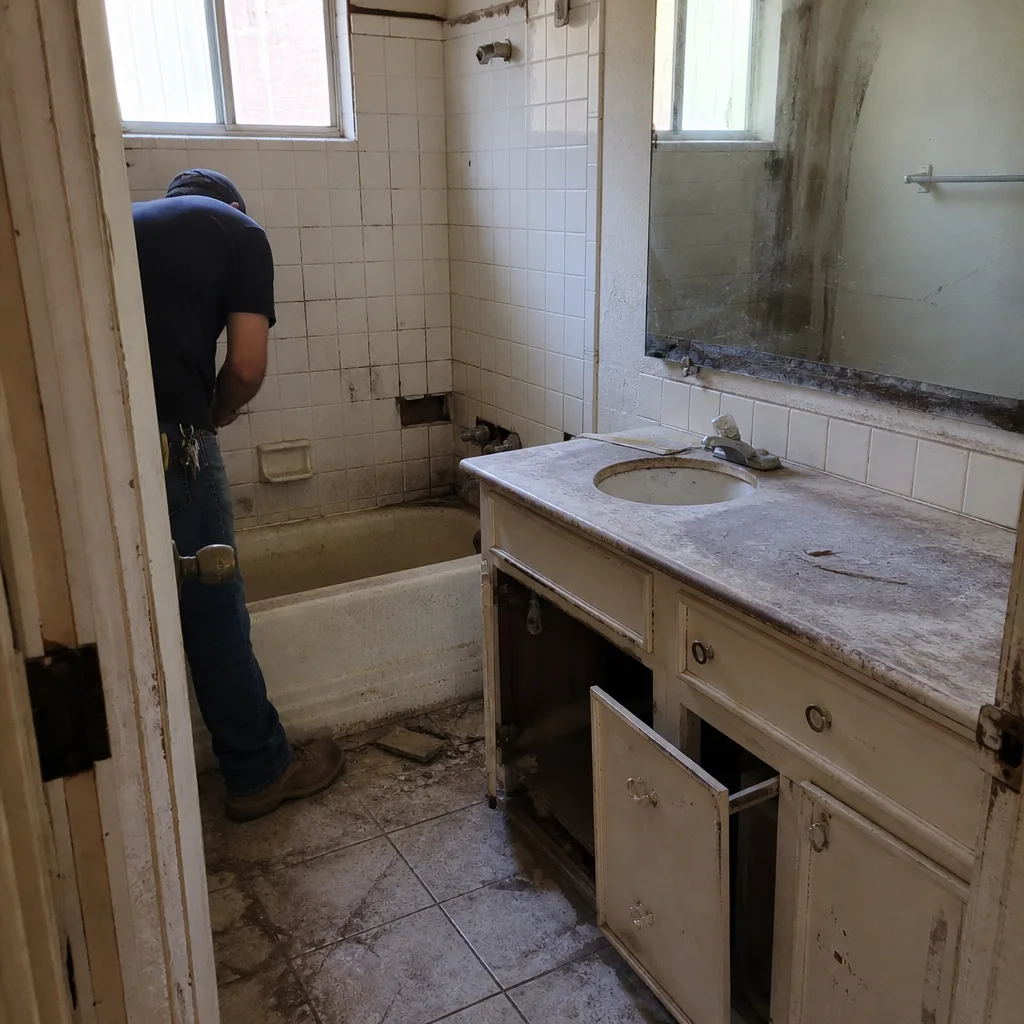 Before
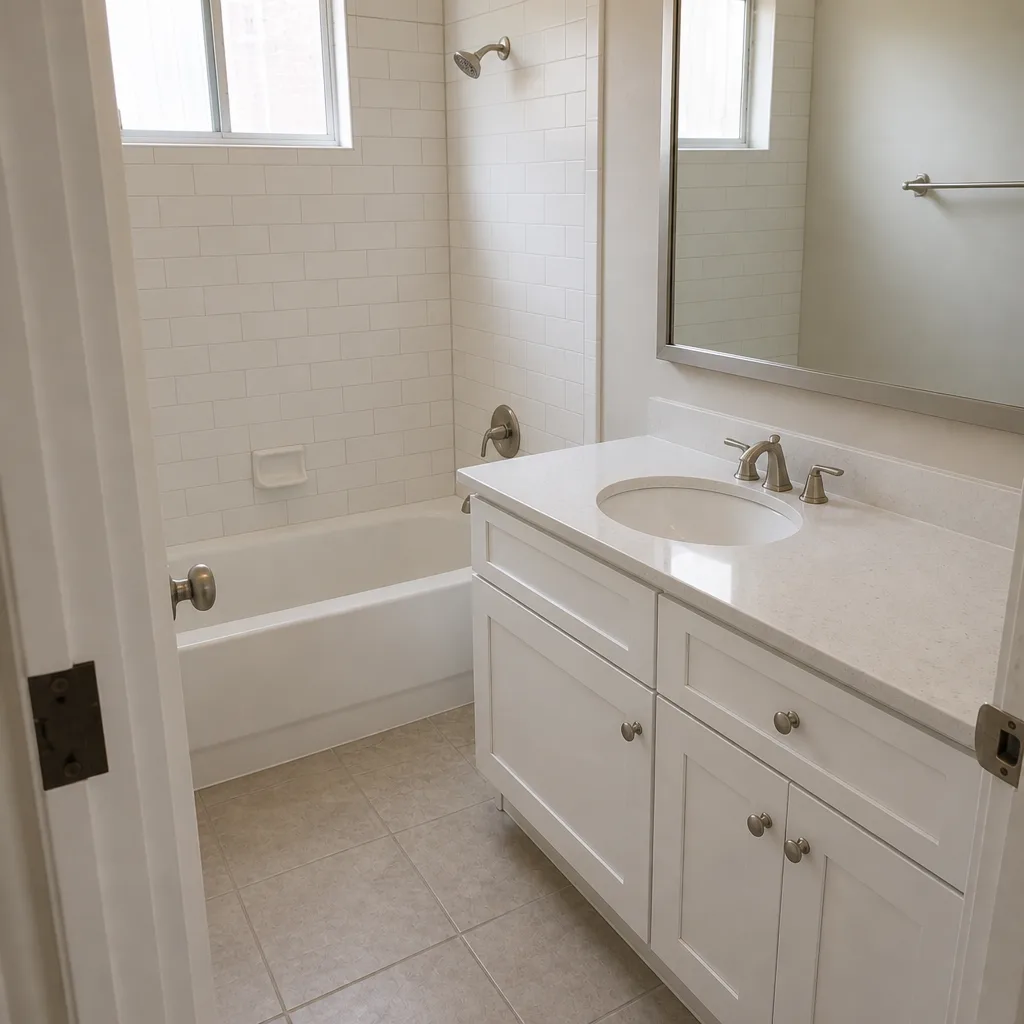 After
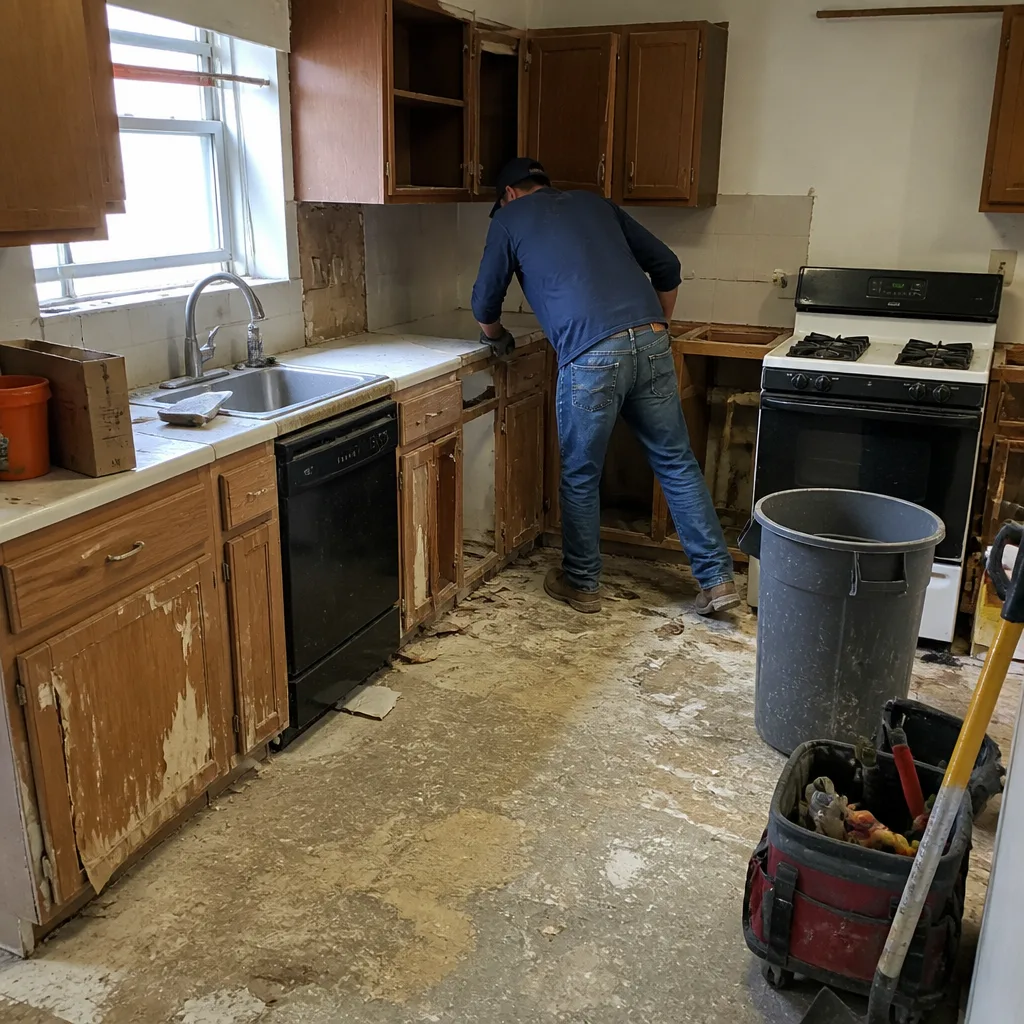 Before
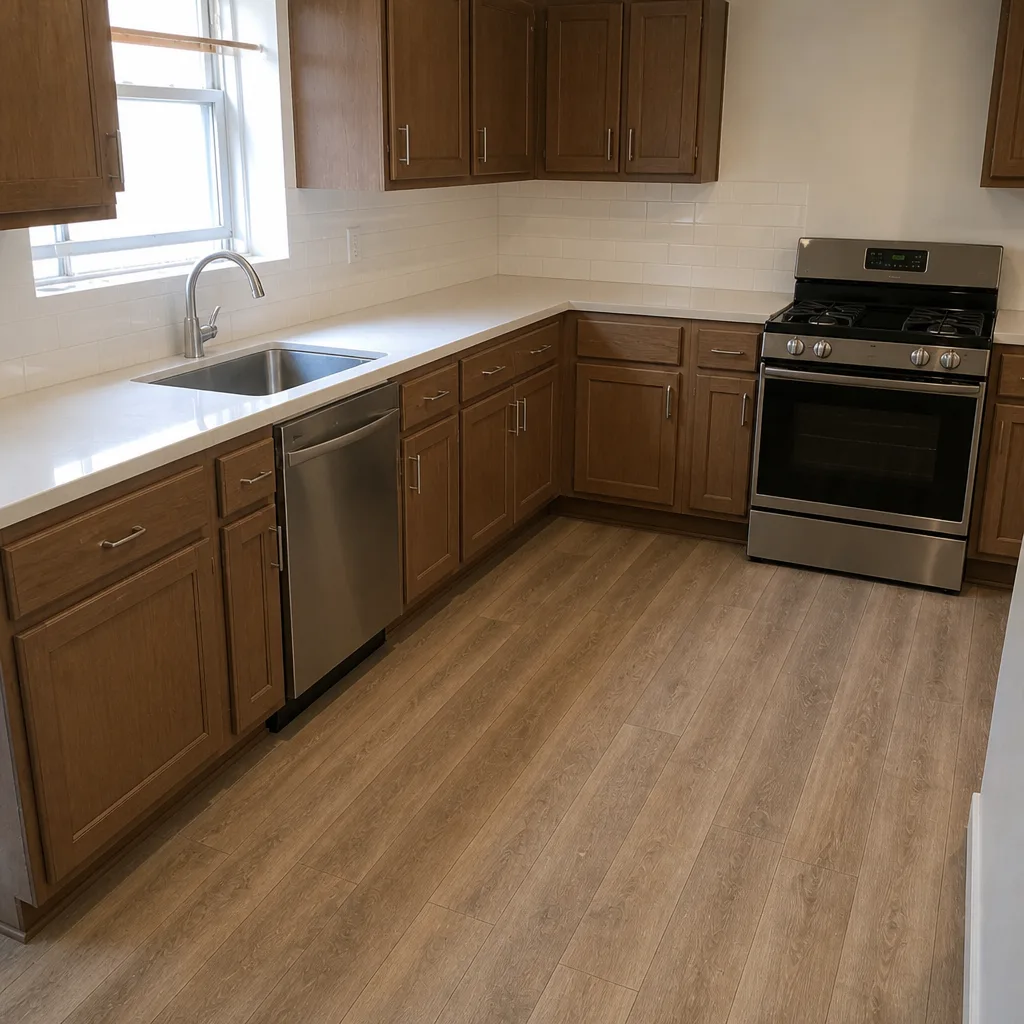 After
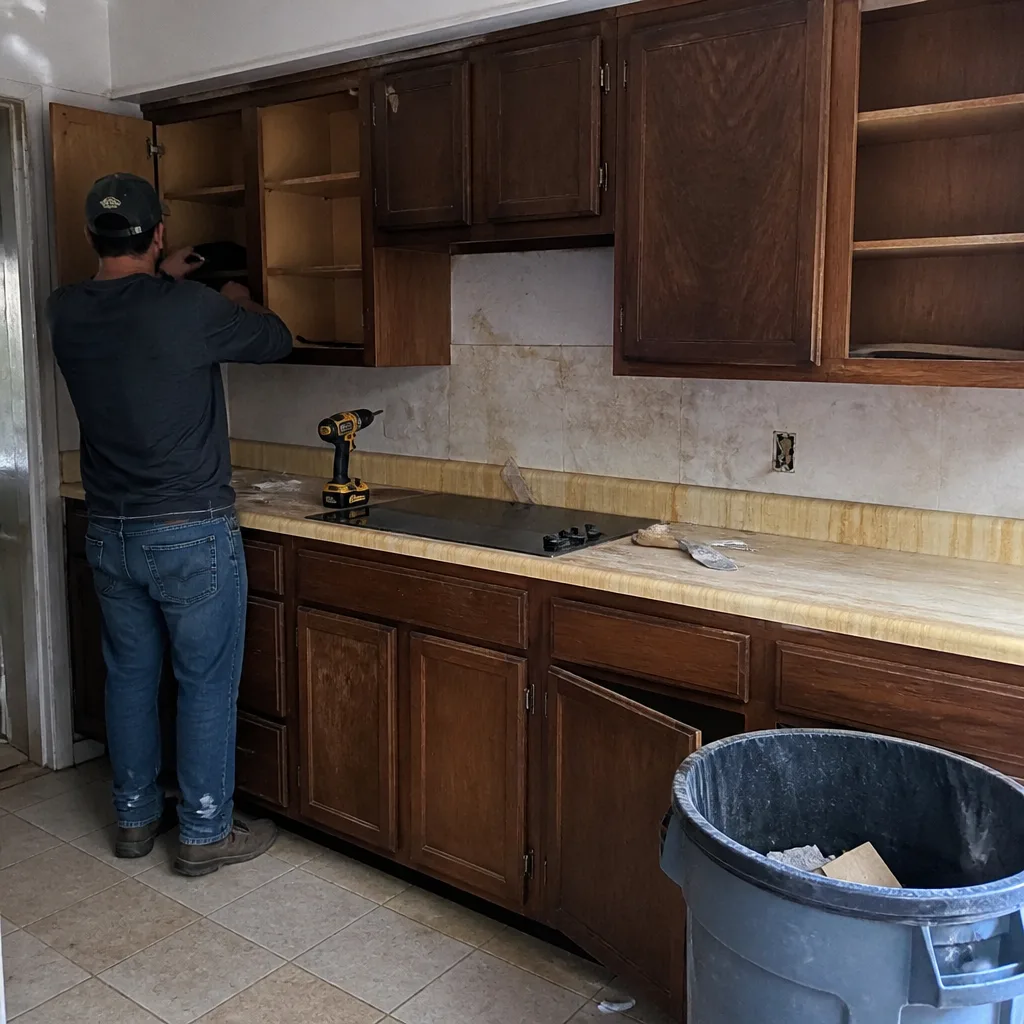 Before
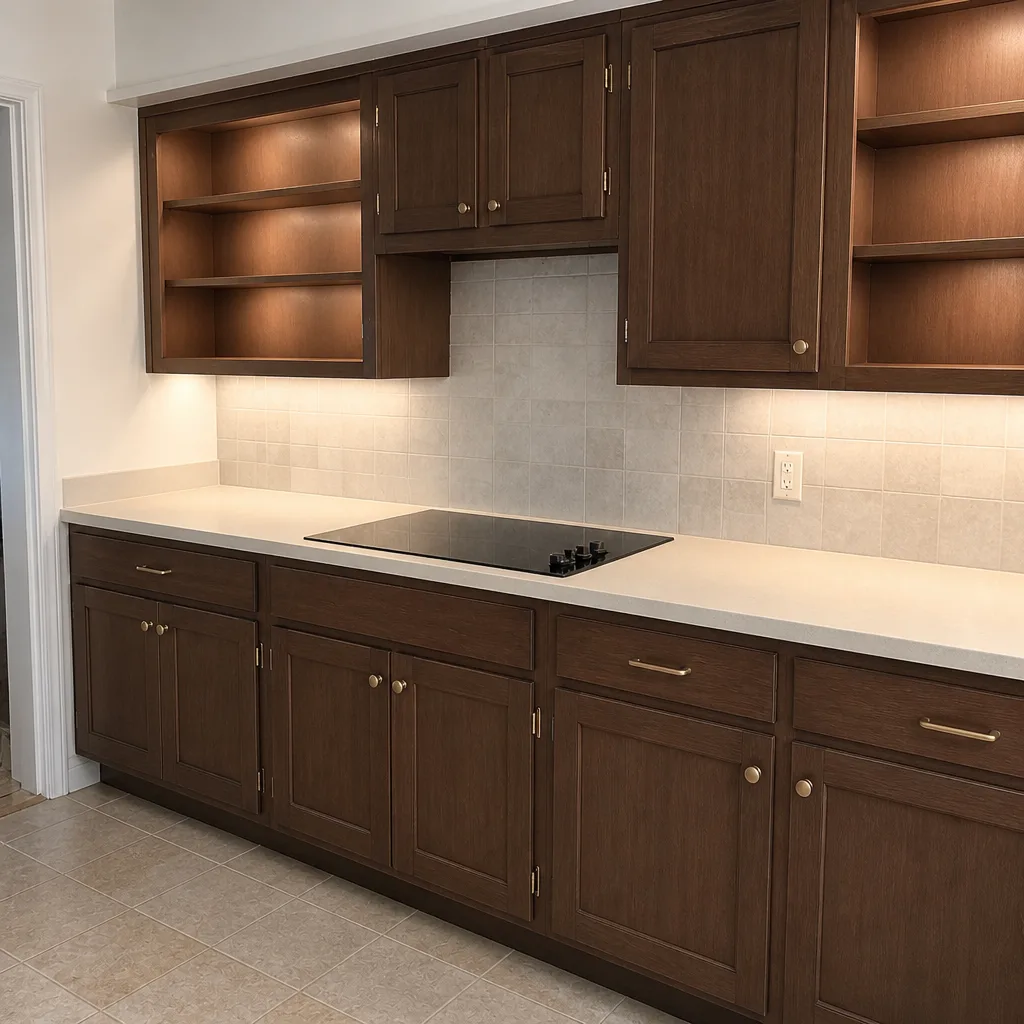 After
When to Call a Professional
Call a professional when any of the following is true in your Lewisville home: a sign presses soft, a sign has visibly grown within one season, three or more signs cluster in one area, a horizontal crack has appeared in brick or a foundation wall, or the top of the three-touch test has triggered. Call immediately if a ceiling has stained after a rain or a roof area has a soft spot underfoot. Electrical and gas lines near movement should be inspected by a licensed professional, not adjusted by a homeowner. Foundation movement, roof structure, and penetrations are all systems a trained eye should assess. Our technicians have up to 12 years of experience with the conditions in this area. Construction Lewisville offers free estimates in Lewisville, and a written line-item quote sets the final price on any job. Call (833) 620-6067 to talk through what you’ve found.
Frequently Asked Questions

Direction, growth, and clustering tell you far more than size. A diagonal crack near a window corner that’s growing is more serious than a long vertical crack that hasn’t changed in years. A horizontal crack in brick or a foundation wall needs a professional look quickly. Photograph it with a ruler in frame and recheck in 30 days; if it’s changed, it’s serious enough to call.
Granules washed into the downspout catch and a chewed-looking ridge cap are usually the first signs. Hail knocks granules loose and impacts the ridge caps at the peak before the field shingles. From the ground you’ll see the grit, not the damage. Call (833) 620-6067 for an assessment. We answer 24/7. Fast dispatch from 7am to 7pm, Sunday through Friday.
Filling the joint doesn’t fix the cause. A widened joint means the base under the slab has lost support, and filler will crack again as the slabs continue to move. Fix the base or replace the section. Call (833) 620-6067 and we’ll walk you through whether your driveway is past the repair stage – estimates are free.
Usually not the whole wall, but you do need to open the area to check what’s behind it. A soft spot on fiber cement, wood, or vinyl trim is a sign water has reached the sheathing or the framing. The repair is localized if water stayed behind one section. It grows if it was left. An inspector needs to see it in person.
Some seasonal sticking is normal on a humid day, especially in a Lewisville spring. A door that sticks in only one room, on one side, for the first time, and stays stuck after the weather changes is a movement sign, and it’s worth pairing with a check for diagonal cracks in that room. Call (833) 620-6067 for a free estimate if it’s new and persistent.
An inspection and a free estimate costs nothing with us. The price of any actual repair is set per job by a written line-item quote, and the right material choice (Cambria, Silestone, or Caesarstone for a countertop replacement during a kitchen fix, for example) can shift the total more than the labor. Call (833) 620-6067 to schedule and get a written quote – estimates are free.
The Bottom Line
The construction warning signs that cost the most in Lewisville are the quiet ones: the diagonal drywall crack, the soft trim, the widened driveway joint, the lighter-colored ridge cap. They show up months before a failure, when the repair is small, and they’re easy to paint over or ignore. Read direction and growth first. Use the three-touch test to sort them. Inspect exterior signs in the wet spring and movement signs in the dry fall. Document what you find with dated photos and scale. And once the top of the test has triggered, call before the next season. A professional assessment while the sign is still small is the cheapest decision on this whole list. From the ridge cap to the driveway edge, one contractor can look at all of it at once. We’ll walk you through what we see before a single measurement is taken.
Construction Lewisville handles the full scope in Lewisville, from roofing, windows, and fencing on the outside to kitchens, bathrooms, and additions on the inside. We carry access to more than 50 name-brand manufacturers across every category, and materials at every budget tier. When a sign turns into a project, or when it points to a fence line that’s also failing (our guide to fence installation covers that side of the property), one company can coordinate the lot. The ADU and addition side is covered too, including prefab/modular options through Abodu, Boxabl, Mighty Buildings, and Dvele alongside traditional site-built methods. We’ll walk you through the material options before a single measurement is taken. Call (833) 620-6067 for a free estimate. We answer 24/7. Fast dispatch from 7am to 7pm, Sunday through Friday.
Written by the team at Construction Lewisville.