
Quikrete Driveway & Pavers in Lewisville: A Homeowner’s Guide
Quikrete’s Concrete Crack Seal sits on the shelf at every Lewisville home center, and it works well within its limits. Those limits are narrow: the product handles cracks up to about 1/2 inch wide, and many of the thermal cracks we see across North Texas driveways run wider than that. The mismatch is printed on the packaging in small type. Buy the wrong Quikrete product for a Lewisville driveway and you’ll be back at the store by fall. Pick the right one, and you’ll buy a repair that actually holds. If you’d rather not DIY, call (833) 620-6067 and we’ll talk through what your driveway actually needs.
Which Quikrete products actually suit a Lewisville driveway?
The short answer: match the Quikrete SKU to the job, not to the picture on the bag. A Lewisville driveway takes sun, clay-heavy soil that moves with the seasons, and summer heat that changes how concrete behaves during cure. Quikrete makes products that fit that reality and products that don’t, and the bag rarely tells you which is which unless you read the spec line.
For actual structural patching, look for the polymer-modified mixes that carry an ASTM C1240 designation on the bag. Those hold better under traffic and temperature change than basic gray bag concrete, which is really a general-purpose utility product. For crack filling, the Concrete Crack Seal is fine on hairline and narrow cracks, but if you’re looking at anything wider, you want a pourable polyurethane or a sand-and-cement repair rather than a tube of sealant pushed beyond its rated width.
- Basic gray bag concrete: fine for setting posts and small flatwork, not for patching a driveway surface that takes vehicle loads.
- Polymer-modified repair mixes: the right call for spalls, chipped edges, and thin overlays where bonding matters.
- Concrete Crack Seal: rated to roughly 1/2 inch; wider cracks need a different approach.
- FastSet Repair Mortar: useful as a base-patch product, more on that below.
- Polymeric jointing sand: the upgrade worth considering for paver joints, covered in its own section.
None of those products fix a sub-base problem, and that’s the line most homeowners cross without realizing it. If the slab is moving because the ground beneath it is moving, no bag of Quikrete solves it.
Polymer-modified paver sand vs. standard jointing sand: which one on a Texas driveway?
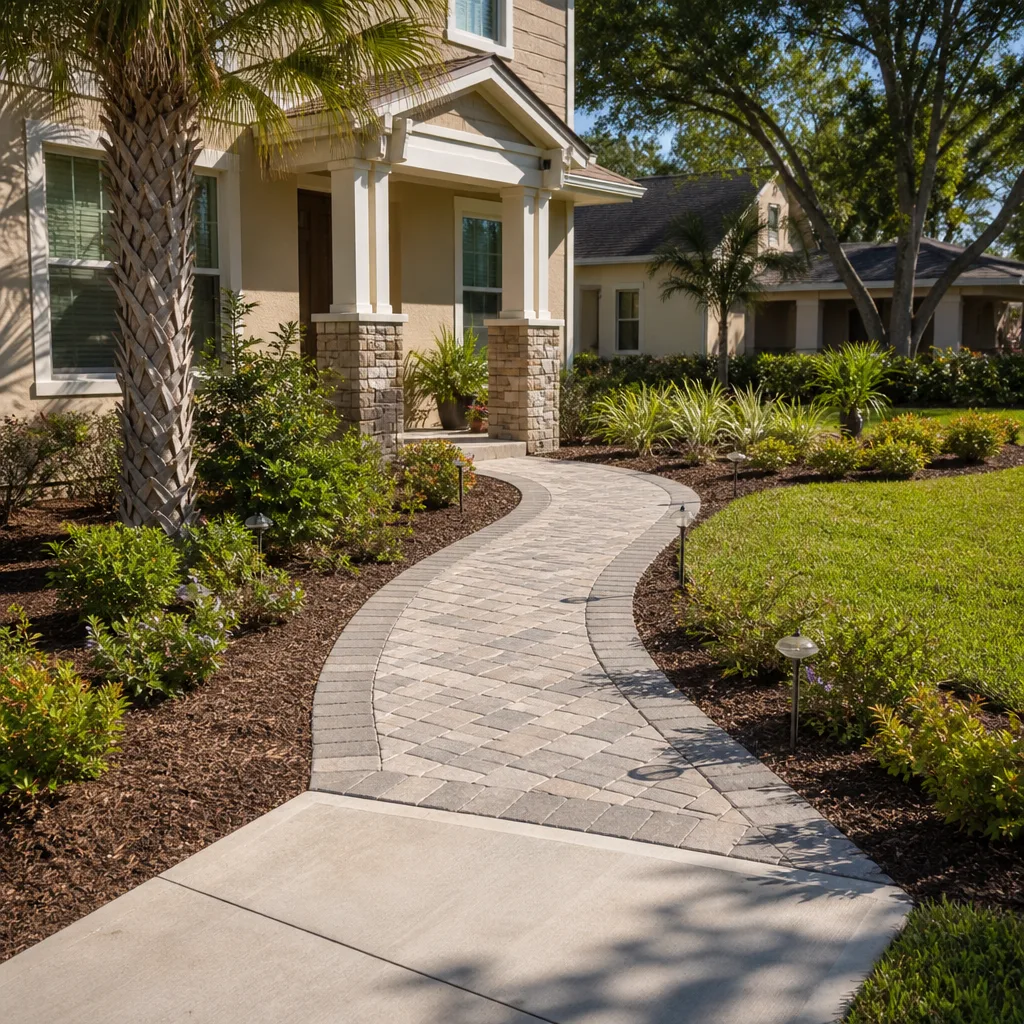
Standard jointing sand is cheap and it works, until rain and runoff wash it out of the joints. Polymer-modified paver sand sets up harder, resists washout better, and holds the joint longer in a climate where summer storms arrive fast and heavy. On a Lewisville driveway that gets driven on daily and hosed off regularly, the polymer version is usually worth the upgrade. On a lightly used walkway or a small patio that never sees a car, standard sand is fine and the polymer is overkill.
The honest math: the price gap between the two is small relative to the labor of re-sanding joints, which is the real cost either way. If you’re going to pay someone to sweep and compact sand into joints, spend the extra on the polymer product and get more years out of it.
Where it gets tricky is installation. Polymer sand needs the right moisture and compaction to cure properly, and getting that wrong in 95°F heat leaves you with a soft joint that fails within a season. That’s the part homeowners underestimate. The product is good; the application window is unforgiving.
How do you mix and cure Quikrete when Lewisville hits 90°F and above?
Above 90°F, standard mixing instructions start to fail. Concrete and mortar cure by chemical reaction, and heat accelerates that reaction. Mix too warm, and the material sets before you can place and finish it. Mix with hot water straight from the hose sitting in the sun, and you’ve shortened your working time further. In our experience, once Lewisville’s summer settles in, the bag instructions assume a cooler day than the one you’re actually working in.
What to adjust:
- Use cool water, not water that’s been sitting in a sun-baked hose. Run the hose for a minute first.
- Mix smaller batches. A batch you can place in ten minutes beats a batch that sets up in the bucket.
- Work in the morning. Surface temperatures on a driveway can run well above air temperature by early afternoon.
- Keep the finished patch damp and shaded for the first day. Rapid drying causes shrinkage cracks, and shrinkage cracks are exactly what you’ll be repairing next season.
- Don’t add extra water to stretch a batch. It feels like it buys working time; it costs you strength.
Expect a full cure to take considerably longer than the “set” time on the bag. A patch that feels hard in a few hours is still gaining strength for days, and driving on it too soon is one of the most common reasons a DIY repair fails.
FastSet Repair Mortar: base patch or surface cosmetic?
FastSet Repair Mortar earns its place as a base-patch product when you’re resetting pavers. Pull a sunken paver, clean out the old bedding material, and use a repaired mortar bed to bring the base back to grade before the paver goes back down. That’s the use case where the fast-setting behavior helps: you get a firm bed under the paver without waiting a full day for a traditional mix to cure.
As a surface cosmetic fix, it’s less reliable. Smearing FastSet over a spalled or cracked driveway surface makes the problem look better for a season, but if the underlying slab is moving or the sub-base has failed, the patch cracks again and takes a little more of the original surface with it. We’ve seen the difference play out many times on Lewisville driveways: the cosmetic fix buys months, the base repair buys years.
So treat it as a tool, not a cure. FastSet is the right product when you have a defined, small area to bring back to grade under a paver. It’s the wrong product when the goal is to hide a larger problem.
What Quikrete can’t do: the contractor threshold
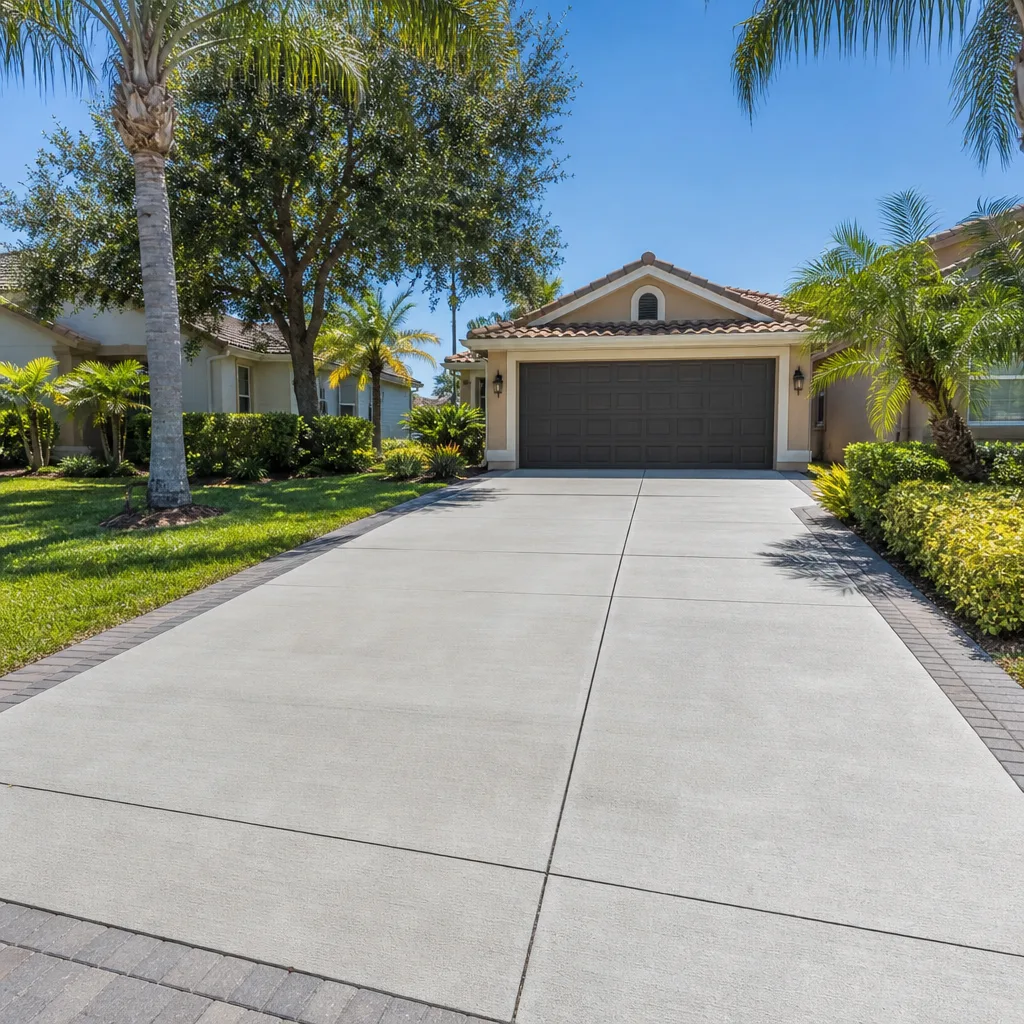
Every bag of Quikrete is designed to solve a small, defined problem. Some problems aren’t small or defined. Knowing where the line sits saves you from repeat repairs that never quite work.
Call a contractor when you’re looking at:
- Load-bearing sub-base repair. If the ground under the pavers or slab has settled, no surface product fixes it. The base has to come out and be rebuilt properly.
- Structural slab replacement. A slab that’s cracked through, heaved, or separated at a control joint beyond what patching can address needs replacement, not repair.
- Edge restraint failure. When the paver edge restraint lets go, pavers spread and joints open. That’s a construction repair, not a sanding one.
- Recurring cracks in the same spot. A crack that keeps opening after patching is telling you something under the slab is moving.
If you’re facing any of that, a bigger bag of Quikrete isn’t the answer. Our technicians have up to 12 years of experience reading these failure patterns, and we do our driveway & pavers work with manufacturer relationships across Belgard, Unilock, Techo-Bloc, Tremron, and Cambridge Pavers, so the rebuild matches the original spec. If the repair turns out smaller than expected, we’ll tell you that too.
If you’ve been meaning to sort out the rest of the yard while the driveway is torn up, our fence installation and home additions & ADU teams work alongside the paver crews, and you can see the full scope of what we handle on the Construction Lewisville homepage.
The Bottom Line
Here’s what actually matters when you’re standing in the aisle deciding which Quikrete bag to buy:
- Read the spec line, not the picture. Polymer-modified and ASTM C1240 mixes are built for real traffic; basic gray bag concrete isn’t.
- Match the crack product to the crack width. Concrete Crack Seal tops out around 1/2 inch.
- Upgrade to polymer-modified paver sand on a driveway that gets driven and hosed. Skip the upgrade on a decorative walkway.
- Adjust your mix and cure routine any time Lewisville temperatures climb above 90°F.
- Use FastSet as a base patch under pavers, not as a surface cover-up.
- Call a contractor for sub-base, structural slab, or edge-restraint work. That’s the repair threshold.
Frequently Asked Questions
Yes, but only on cracks up to about 1/2 inch wide. Wider cracks need a pourable filler or a mortar repair, and a tube of crack seal stretched past its rated width will fail. If you’re not sure how wide your cracks are, measure before you buy.
On a driveway, usually yes. It resists washout and holds joints longer than standard sand, and the price difference is small next to the labor of re-sanding. On a walkway or lightly used path, standard sand is adequate and the upgrade is optional.
No. Quikrete can replace the bedding under a paver once it’s lifted, but it can’t fix the reason the paver sank. If the sub-base below has settled, patching the surface just means the paver drops again. Rebuilding the base is the repair.
Above 90°F, working time shortens sharply and standard bag instructions become optimistic. Work in the morning, use cool water, mix smaller batches, and keep the finished surface damp and shaded. If the surface temperature is too hot to touch comfortably, wait for a cooler window.
If you’re in Lewisville and need help, Construction Lewisville offers free estimates – call (833) 620-6067. We answer 24/7. Fast dispatch from 7am to 7pm, Sunday through Friday. Every estimate is a written line-item quote, and the written estimate sets the final price.
Written by the team at Construction Lewisville.
Need Construction Help?
Call Construction Lewisville - licensed & insured, here with fast help in Lewisville.
(833) 620-6067